Send Us a Message
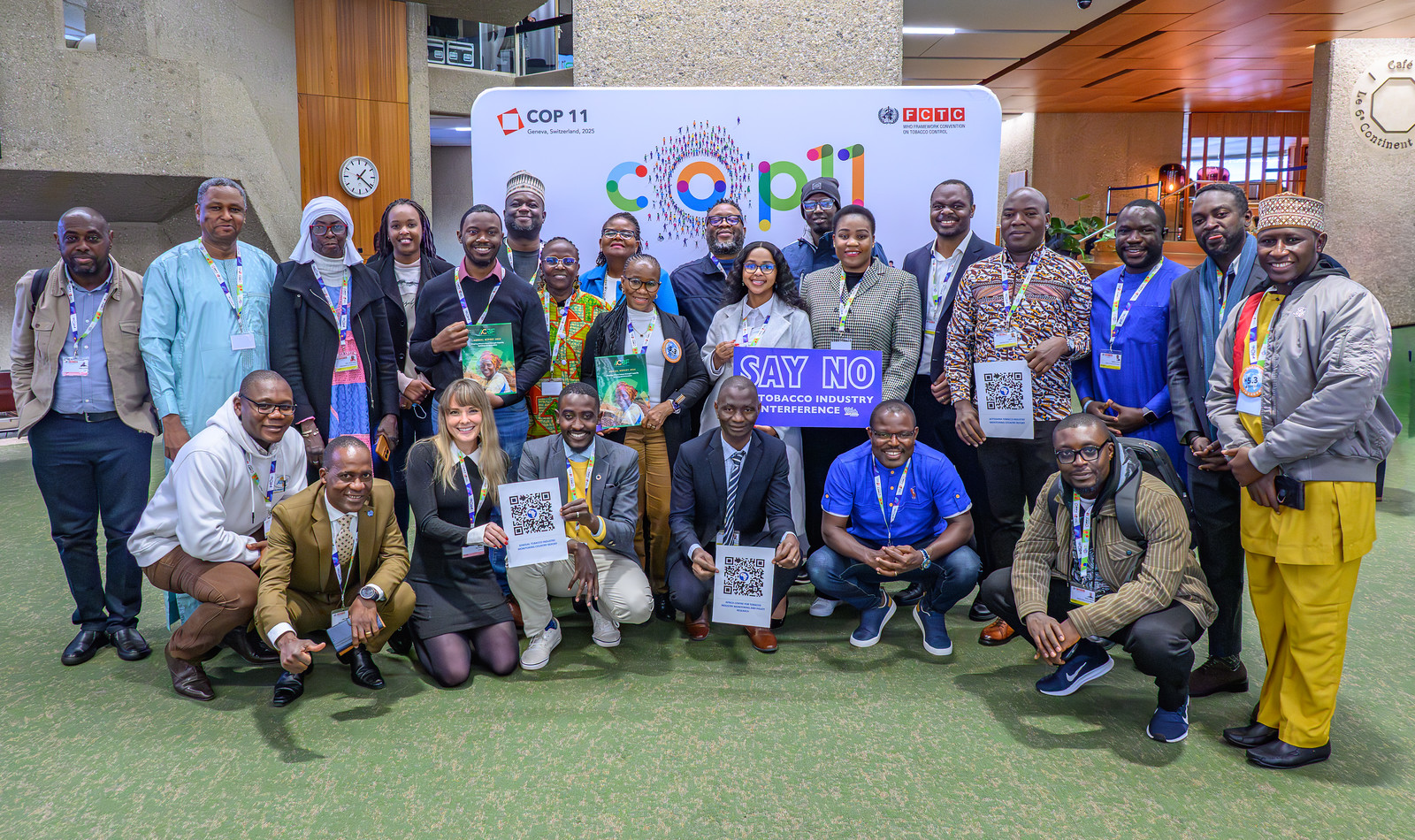
The African Capacity Building Foundation (ACBF) joined governments, civil society organizations, youth groups and global health actors in Geneva from Nov. 17 to 22, 2025 for the eleventh session of the Conference of the Parties (COP11) of the WHO Framework Convention on Tobacco Control.
The conference concluded with a series of decisions that reinforce global commitment to reducing tobacco use and protecting public health. It provides an essential framework for addressing the harms caused by tobacco.
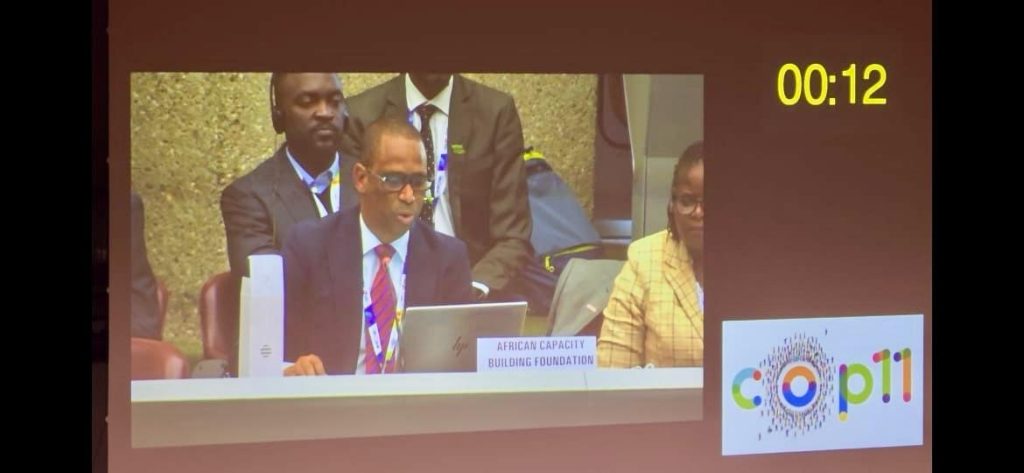
While the Convention sets global standards, its effectiveness in Africa depends on the strength of institutions responsible for implementing and enforcing its measures. The continent’s progress will continue to rely on the systems, skills and leadership structures that translate commitments into sustained action.
Across many African countries, novel nicotine products are expanding, youth exposure is rising, and cross-border challenges require coordinated responses. Demographic growth adds urgency, with millions of young people entering adulthood at a time when industry influence is becoming more sophisticated. This reality positions institutional resilience as one of Africa’s most critical public health priorities.
Capacity-Building Impact
For more than a decade, ACBF has supported governments, civil society organizations, think tanks, and regional knowledge hubs in developing the institutional and human capabilities needed to implement the Convention.
This support reflects ACBF’s broader mandate as the African Union’s specialized agency for capacity development and reinforces the idea that sustainable tobacco control is inseparable from strong systems, skilled professionals, and coordinated governance.
ACBF’s work focuses on strengthening institutional and human capacity by supporting civil society organizations, think tanks, regional knowledge hubs and national systems with training, evidence, tools and coordination mechanisms that reinforce effective implementation of the Convention.
This approach aligns with the African Union’s Agenda 2063 and supports global commitments under the Sustainable Development Goals, both of which place capable institutions and strong public health systems at the center of Africa’s long-term development aspirations.
Knowledge remains a key foundation of effective tobacco control. ACBF has supported the production and dissemination of more than 300 tobacco control related knowledge products, offering policymakers, researchers and advocates data, guidance and evidence that inform regulatory measures and enhance public awareness efforts.
ACBF has strengthened the capacity of more than 100 civil society organizations and research centres, supported over 20 countries in adopting or implementing tobacco control policies, and engaged over 60 think tanks in awareness and advocacy activities to promote tobacco control research. The Foundation has also trained more than 20 professionals in tobacco control, contributing to stronger systems, improved coordination and long-term implementation across countries.
These achievements demonstrate that capacity building is a practical and proven path for countries seeking to advance tobacco control, protect young people and reinforce national health priorities.
ACBF at COP11
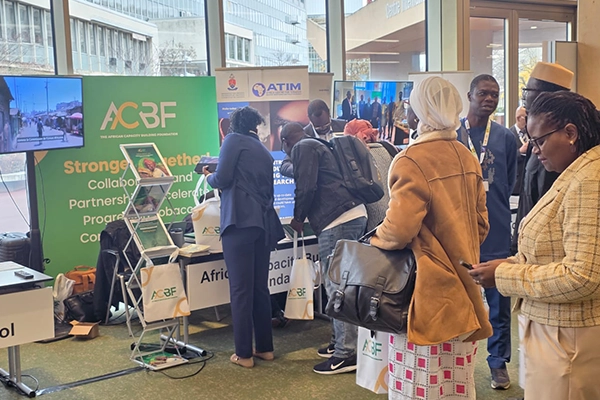
COP11 offered a timely platform to highlight the importance of these contributions. As parties reviewed global progress and considered new measures to address emerging products, ACBF emphasized that sustained investment in institutional capacity is essential for meaningful implementation. Countries require continuity, skilled teams and coordinated systems to enforce regulations, monitor industry practices and safeguard communities from harmful products.
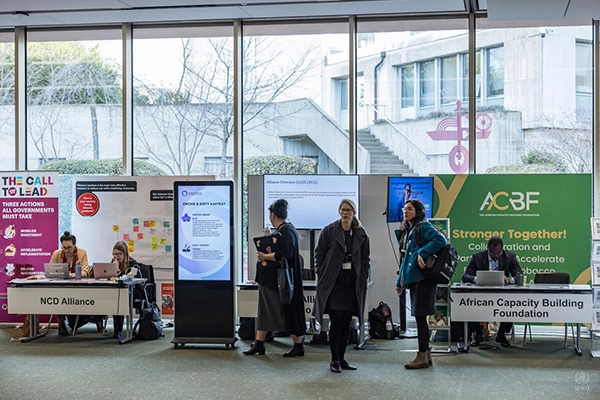
Throughout the week, the ACBF delegation engaged with governments, youth representatives, NGOs and technical partners, reinforcing the Foundation’s role as a continental leader in capacity development for tobacco control. At the ACBF booth, delegates accessed the 2024 annual report, the knowledge products developed on tobacco control-related issues and tools that have supported governments and organizations across Africa.
Based on observations during the event, the ACBF booth welcomed an estimated average of 80 visitors per day, making it one of the most visited at COP11. This strong engagement reflected the high interest in ACBF’s work on tobacco control and capacity building across Africa. Delegations from several African countries, as well as from Latin America, China, France, Canada and Spain, showed particular interest in learning about ACBF’s programs and institutional strengthening initiatives.
A side event hosted by ACBF showcased examples of institutional strengthening from regional partners. The session illustrated how targeted capacity building improves credibility, sustainability and policy influence, demonstrating the tangible results of long-term investment in institutional strengthening.
A Global Health Treaty with Continental Relevance
Participation across COP11 was broad, with governments, NGOs, youth voices and observers contributing to discussions and side sessions on issues central to the Convention. The WHO FCTC remains the first public health treaty negotiated under the WHO’s auspices, with 183 parties covering 90 percent of the global population. It offers a legal framework and comprehensive measures ranging from large pictorial warnings to smoke-free laws and higher tobacco taxes, measures that have already saved millions of lives.
For Africa, the treaty’s full potential can only be realized when institutions are strong enough to implement it consistently and sustainably. This is where ACBF’s mandate intersects most clearly with global health and development priorities.
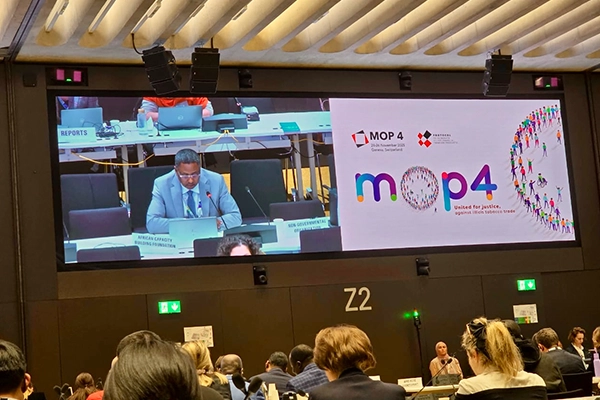
Effective tobacco control in Africa requires strong institutions, skilled professionals and sustained collaboration. While the Convention provides direction, long-term progress depends on the systems and people responsible for carrying it out.
ACBF remains committed to supporting countries and regional organizations as they work to strengthen their institutional foundations, build capabilities and invest in sustainable implementation. Africa’s tobacco control future will be shaped by the strength of its systems and the long-term investments made today to protect present and future generations.