
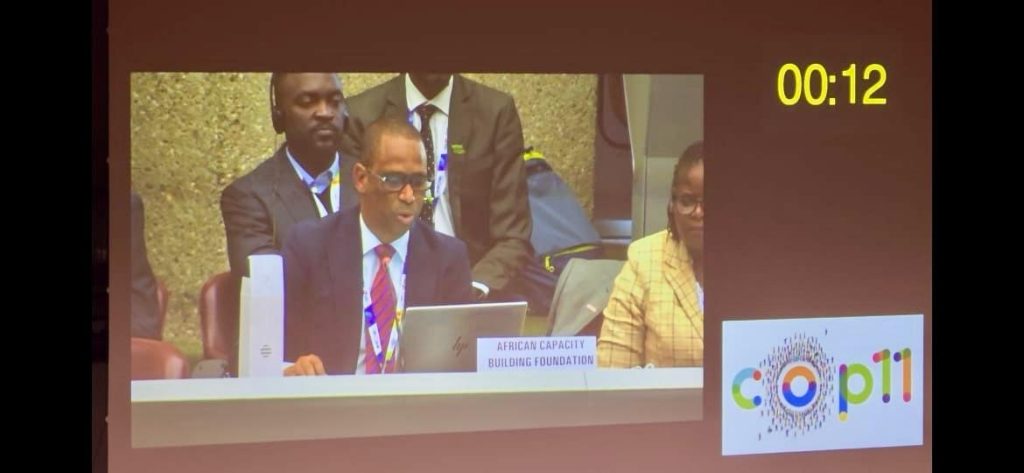
The African Capacity Building Foundation (ACBF) joined governments, civil society organizations, youth groups and global health actors in Geneva from Nov. 17 to 22, 2025 for the eleventh session of the Conference of the Parties (COP11) of the WHO Framework Convention on Tobacco Control.
The conference concluded with a series of decisions that reinforce global commitment to reducing tobacco use and protecting public health. It provides an essential framework for addressing the harms caused by tobacco.
While the Convention sets global standards, its effectiveness in Africa depends on the strength of institutions responsible for implementing and enforcing its measures. The continent’s progress will continue to rely on the systems, skills and leadership structures that translate commitments into sustained action.
Across many African countries, novel nicotine products are expanding, youth exposure is rising, and cross-border challenges require coordinated responses. Demographic growth adds urgency, with millions of young people entering adulthood at a time when industry influence is becoming more sophisticated. This reality positions institutional resilience as one of Africa’s most critical public health priorities.
Capacity-Building Impact
For more than a decade, ACBF has supported governments, civil society organizations, think tanks, and regional knowledge hubs in developing the institutional and human capabilities needed to implement the Convention.
This support reflects ACBF’s broader mandate as the African Union’s specialized agency for capacity development and reinforces the idea that sustainable tobacco control is inseparable from strong systems, skilled professionals, and coordinated governance.
ACBF’s work focuses on strengthening institutional and human capacity by supporting civil society organizations, think tanks, regional knowledge hubs and national systems with training, evidence, tools and coordination mechanisms that reinforce effective implementation of the Convention.
This approach aligns with the African Union’s Agenda 2063 and supports global commitments under the Sustainable Development Goals, both of which place capable institutions and strong public health systems at the center of Africa’s long-term development aspirations.
Knowledge remains a key foundation of effective tobacco control. ACBF has supported the production and dissemination of more than 300 tobacco control related knowledge products, offering policymakers, researchers and advocates data, guidance and evidence that inform regulatory measures and enhance public awareness efforts.
ACBF has strengthened the capacity of more than 100 civil society organizations and research centres, supported over 20 countries in adopting or implementing tobacco control policies, and engaged over 60 think tanks in awareness and advocacy activities to promote tobacco control research. The Foundation has also trained more than 20 professionals in tobacco control, contributing to stronger systems, improved coordination and long-term implementation across countries.
These achievements demonstrate that capacity building is a practical and proven path for countries seeking to advance tobacco control, protect young people and reinforce national health priorities.
ACBF at COP11
COP11 offered a timely platform to highlight the importance of these contributions. As parties reviewed global progress and considered new measures to address emerging products, ACBF emphasized that sustained investment in institutional capacity is essential for meaningful implementation. Countries require continuity, skilled teams and coordinated systems to enforce regulations, monitor industry practices and safeguard communities from harmful products.
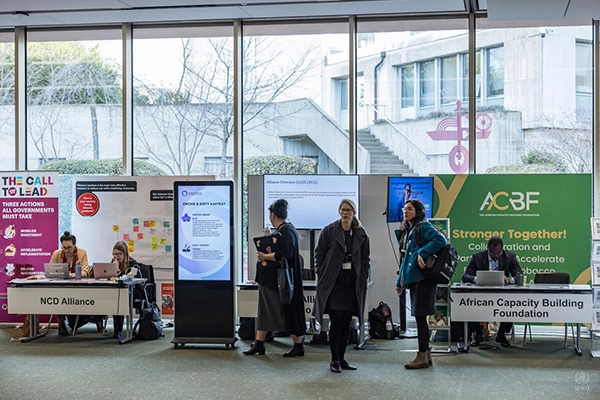
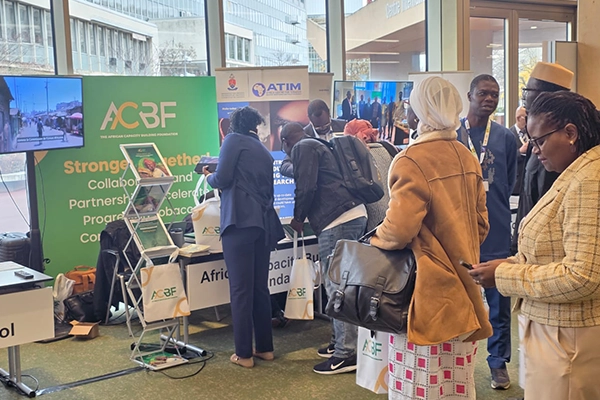
Throughout the week, the ACBF delegation engaged with governments, youth representatives, NGOs and technical partners, reinforcing the Foundation’s role as a continental leader in capacity development for tobacco control. At the ACBF booth, delegates accessed the 2024 annual report, the knowledge products developed on tobacco control-related issues and tools that have supported governments and organizations across Africa.
Based on observations during the event, the ACBF booth welcomed an estimated average of 80 visitors per day, making it one of the most visited at COP11. This strong engagement reflected the high interest in ACBF’s work on tobacco control and capacity building across Africa. Delegations from several African countries, as well as from Latin America, China, France, Canada and Spain, showed particular interest in learning about ACBF’s programs and institutional strengthening initiatives.
A side event hosted by ACBF showcased examples of institutional strengthening from regional partners. The session illustrated how targeted capacity building improves credibility, sustainability and policy influence, demonstrating the tangible results of long-term investment in institutional strengthening.
A Global Health Treaty with Continental Relevance
Participation across COP11 was broad, with governments, NGOs, youth voices and observers contributing to discussions and side sessions on issues central to the Convention. The WHO FCTC remains the first public health treaty negotiated under the WHO’s auspices, with 183 parties covering 90 percent of the global population. It offers a legal framework and comprehensive measures ranging from large pictorial warnings to smoke-free laws and higher tobacco taxes, measures that have already saved millions of lives.
For Africa, the treaty’s full potential can only be realized when institutions are strong enough to implement it consistently and sustainably. This is where ACBF’s mandate intersects most clearly with global health and development priorities.
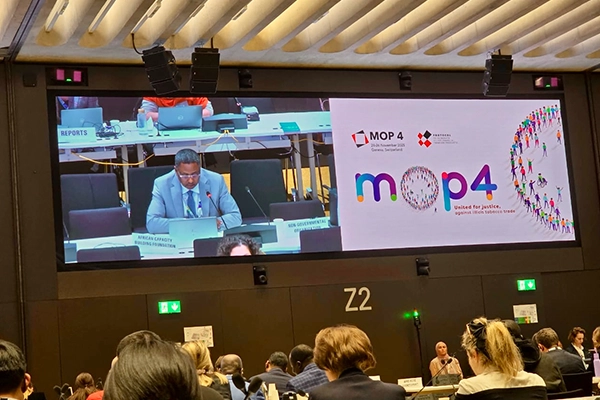
Effective tobacco control in Africa requires strong institutions, skilled professionals and sustained collaboration. While the Convention provides direction, long-term progress depends on the systems and people responsible for carrying it out.
ACBF remains committed to supporting countries and regional organizations as they work to strengthen their institutional foundations, build capabilities and invest in sustainable implementation. Africa’s tobacco control future will be shaped by the strength of its systems and the long-term investments made today to protect present and future generations.
The African Capacity Building Foundation (ACBF) has learned with deep sadness of the untimely passing of Dr. Soumana Sako, former Executive Secretary of the Foundation, and pays tribute to a distinguished servant of the African continent.
An accomplished economist, statesman, and visionary leader, Dr. Sako left an indelible mark on the history of capacity development in Africa. His tenure as Executive Secretary was instrumental in strengthening ACBF’s strategic role as the continent’s leading institution for capacity building, institutional development, and good governance.
Under his leadership, the Foundation steadfastly pursued its mission to equip African countries with the human, institutional, and policy capacities necessary to effectively implement their development agendas.
Dr. Sako will be remembered as a man of integrity, dedication, and unwavering commitment to Africa’s self-reliant development. His vision of a strong, resilient, and confident Africa continues to inspire the development community and future generations of African leaders.
The Foundation bows in respect to his memory and extends its heartfelt condolences to his family, friends, and former colleagues and partners.
May his soul rest in peace, and may his legacy continue to guide our collective efforts to strengthen capacity across Africa.
Done in Harare on 16 October 2025
Thinks tanks play a supporting role in providing evidence-based research policy analysis and guidance for the effective implementation of the Africa Continental Free Trade Agreement (AfCFTA), key African leaders of the think tank community have said.
In a round table plenary of the recently held 9th edition of the Africa Think Tank Summit in Zambia between the 8th and 10th of November 2023, five key leaders of African think tanks concurred that AfCFTA implementation provides a platform for think tanks and governments to collaborate.
The round table comprised of Mr Garba Abdoulahi; Coordinator, Cellule d’Analyse des Politiques publiques et d’Evaluation de l’action Gouvernementale (CAPEG) based in Niger; Mrs. Odilia Gnassingbé; Executive Director, CADERDT in Togo; Dr. Rose Ngugi; Executive Director, the Kenya Institute of Public Policy Research and Analysis (KIPPRA) in Kenya; Dr. Briggs Bomba Programs Director TrustAfrica based in Senegal and Mr. Sydney Mwamba, Executive Director, Policy Monitoring and Research Centre (PMRC) in Zambia.
Dr Rose Ngugi said think tanks were knowledge hubs which should take a deliberate move and invest in making stakeholders and citizens understand what AfCFTA was all about. The KIPRA director also said think tanks were supposed to generate knowledge, share and interpret laws, rules and policies required of stakeholders.
“There is need to work together in the monitoring platform by putting together tools for monitoring the implementation both at the local and regional levels. It is at the think tank level that we can start identifying the key indicators that we can put into the platform and see how we deal with the policy surveillance on things that are emerging, actions that have been taken, new trends that are coming up and all these things will help support the policy makers in monitoring the national implementation process both at the national and regional level,” said Ngugi.
Mr Garba Abdoulahi said think tanks were laboratories for new ideas and innovations as they inform the public input on public policies. He also said think tanks were crucial platforms for dialogue because they were the intersections between world politics, the media and civil society.
“There is need to adopt different approaches of think tanks as they provide analysis and evidence and come out with recommendations for different players and the public,” said Abdoulahi.
Mrs. Odilia Gnassingbe complemented Abdoulahi’s observation, reiterating that think tanks were very critical in the implementation of the AfCFTA, especially for the private sector which she said was very limited in the input and consultation processes of the AfCFTA.
“A study carried out by the Pan-African Private Sector Trade and Investment Committee (PAFTRAC) in 2023 show that 85% of private sector do not have information pertaining to the AfCFTA and this shows why think tanks are very important in the providence of information,” said Gnassingbé.
Programs Director for TrustAfrica Dr Briggs Bomba said there was a need for evidence-based advocacy and policy-making on the continent because most of the time, knowledge used in Africa was generated from an alien context of African requirements.
“Knowledge institutions have a role in contextualising the AfCFTA into the African realities so that whatever policy prescriptions we have come up with are reflective with the specifics that exist on the continent,” said Bomba.
Executive Director of the Policy Monitoring and Research Centre (PMRC) Mr. Sydney Mwamba said think tanks were key engines for new ideas, problem framing, agenda setting, solution searching and the push for public policies to implement and monitor the outcomes of the ideas produced.
Mr Mwamba said African think tanks should be the source of knowledge for the generation of policies regarding the domestication of AfCFTA, its implementation, monitoring and evaluation at the national level, regional and continental levels.
The African Capacity Building Foundation’s (ACBF) deliberate investment in the development of think tanks has accelerated Africa’s developmental trajectory, given the criticality of think tanks in the providence of a dynamic space of intellectual inquiry that helps refine ideas and translate academic arguments into policy-relevant recommendations; promote exchange of lessons and experiences among experts and decision-makers.
———-END——–
For more information, contact:
Tsitsi Chakonza, +263777879339
A coalition of African think tanks and partners has been proposed to deliver action plans that support the implementation of the African Continental Free Trade Area Agreement (AfCFTA).
To bring down barriers and make African free trade a reality, the continent first needs to break down the hurdles that slow down the free flow of ideas across Africa.
This was the consensus at the 9th Africa Think Tank Summit held in Lusaka, Zambia, from November 8-10. The summit ran under the theme “Linking Evidence, Policies, and Practice to Contribute to the Implementation of the African Continental Free Trade Area Agreement”.
The summit was convened by the African Capacity Building Foundation (ACBF), a specialized agency of the African Union for capacity development, in partnership with the Africa Think Tank Network (ATTN), the Ministry of Commerce, Trade and Industry (MCTI) of Zambia, the William and Flora Hewlett Foundation, the Visa Foundation, the Regional Network of Agricultural Policy Research Institutes (ReNAPRI) Secretariat, the Alliance for a Green Revolution in Africa (AGRA), and the African Economic Research Consortium (AERC).
The event provided a platform for Africa’s leading think tanks to share ideas on how to shift gears on the continent’s road to implementing the AfCFTA. Participants drawn from various disciplines debated the capacities needed to accelerate the implementation of the AfCFTA, and to make sure that its implementation brings sustainable development to Africa.
Speaking at the official opening ceremony, Mr. Mamadou Biteye, Executive Secretary of ACBF, said Africa needs to bridge the gap between policy and action. To do this, he said, ACBF is supporting capacity building in the African institutions that have key tasks in the implementation of the AfCFTA.
“Moreover, it requires building the institutional capacity of regional economic communities and policy research institutions to provide timely and relevant evidence to inform policy debates,” Mr. Biteye said.
For African integration to work, the continent must also integrate its knowledge bases through shared platforms, such as think tanks.
“Let us forge partnerships that transcend borders and sectors, creating a vibrant ecosystem that supports the implementation of the AfCFTA. Together, we can build the capacity required to link evidence to policies and translate them into impactful practices that drive inclusive growth and equitable development,” Mr. Biteye told participants.
Giving his welcoming remarks, Hon Charles Milupi, Minister of Infrastructure, Housing and Urban Development in the Republic of Zambia, said Zambia was confident in the AFCFTA agreement transforming the landscape of African trade.
Among the host of eminent speakers was Dr. Nalishebo Meebelo, Executive Director of the Regional Network of Agricultural Policy Research Institutes (ReNAPRI) Secretariat, Mr William Chibwana, a representative of the William and Flora Hewlett Foundation, Mr Charles Chiza Chiumya, Acting Director- Industry, Minerals, Entrepreneurship and Tourism at the African Union Commission, and Ms. Christina Duarte, Under-Secretary-General and the Special Adviser on Africa to the United Nations Secretary-General.
All who spoke stressed the importance of African think tanks in bringing together the best ideas and skills necessary to make the continent’s ambitions for sustainable growth a reality.
They tasked the think tanks to push beyond setting policies, and to come up with a set of concrete recommendations, policy guidelines, and collaboration framework to guide governments, institutions, and stakeholders to advance the implementation of the AfCFTA.
The summit gathered experts to analyse and raise awareness of the data and evidence gaps to support the successful and effective implementation of the AfCFTA. The think tanks shared experiences on how to improve the use of evidence, practices, and policies in the implementation of the AfCFTA. The summit also set out to identify key capacity and critical technical skills challenges faced by critical institutions and actors that could jeopardize the implementation of the AfCFTA.
Looking beyond policy to practical action, the summit was targeted at proposing specific steps to capacitate the private sector so that it drives the AfCFTA and benefits from its implementation.
For the African Continental Free Trade Area (AfCFTA) to succeed and help in the integration of Africa, African countries will have to take value chains seriously and promote them across the continent. This was one of the major issues that dominated the first day of the African Capacity Building Foundation’s 9th Africa Think Tank Summit in Lusaka, Zambia.
Leading the call for value chains, in a discussion under the topic, “Addressing the evolving challenges of AfCFTA implementation and imperatives for actions”, Mr Charles Chiza Chiumya, the African Union’s Acting Director for Industry, Minerals, Entrepreneurship and Tourism, said Africa could effectively integrate and produce goods and services for the people of the continent by promoting value chains.
“That is why the African Union is promoting value chains,” Mr Chiumya said. “Gone are the days when you produced only for your domestic market. Now the AfCFTA is saying you can produce for more markets beyond your domestic market.”
He cited the example of baby food which Africa imports at a cost of US$600m a year, and pointed out that the continent produces all the ingredients that go into baby food – “basically milk and groundnuts or soya beans,” Mr Chiumya said. “But we spend US$600m a year just to import baby food when we have all the ingredients on the continent to produce it. We export the ingredients as raw material, they make baby food for us, and we import it at higher prices.”
This can only be avoided if the continent promotes value chains, Mr Chiumya said, pointing out that Zambia may have soya beans or groundnuts and its neighbour Malawi may have milk. “So why can’t they come together and produce baby food and take the US$600m market? This is what is going to bring the promise of the AfCFTA that we are talking about,”
Mr Chiumya cited another example, saying Zambia and DRCongo can come together and produce electric batteries for electric cars, “because all the ingredients, whether copper, cobalt, graphite, or lithium are here in this region. So why are we not producing electric batteries?
He said the automotive industry was one of the areas highlighted under the AfCFTA, followed by fintech, textiles, and tourism. “We have the capability to make a bigger mark through the AfCFTA.”
Mr Chiumya drew attention to the Africa Trade Observatory, a digital tool created by the AU that enables the continent to see how it is doing trade-wise.
Under the Africa Trade Observatory, the AU has been building partnerships among member countries and organisations such as the Afreximbank.
Turning to startups, Mr Chiumya said there were many startups coming up especially for the youth and women but most African countries do not have laws regulating startups. So, the AU has developed a model which member countries can use to ensure that their youths are able to innovate.
Mr Chiumya’s take on startups became the opener for Prof Alex Ariho, the CEO of the African Agribusiness Incubators Network (AAIN), which brings together incubators, accelerators, and enterprise support organisations in 48 of Africa’s 55 countries.
According to him, Africa invests a lot in infrastructure and trade negotiations, “but no investment is done to groom emerging startups and SMEs in the ecosystem to boost our economies,” Prof Ariho said.
“Subsequently 60% to 70% of the SMEs and startups that begin business in Africa fail by the second year because we are not providing an enabling ecosystem to allow the startups to gain competent skills and build capacity to be competitive. This is why our network of incubators are cooperating and building partnerships in Africa to advance business incubations and capacity development,” Prof Ariho added.
He said the continent needed market-driven research. “For us to have results, we need to be realistic and invest in research, evidence-based data. If we expect different results, we need to do things differently,” Prof Ariho concluded.
Expanding the discussion on startups, Mr Isaac Mwaipopo, the Executive Director of the Centre for Trade Policy Development of Zambia, advocated for mentorship to be provided to startups to network. “We need to be doing this much more deliberately to make it effective,” he said, and called on African leaders to include startup owners on their travels so they can see what is going on elsewhere.
Mr Mwaipopo also advocated for border markets in the implementation of the AfCFTA. “This doesn’t require much money, so let all the countries or regional economic communities establish border market zones where cross-border traders will come to transact,” Mr Mwaipopo urged African nations.
“There must be banking facilities at the border markets so that there is safety,” Mr Mwaipopo continued. “All the government agencies that are required to be there must be there. There is an example of such a border market between Nigeria and Benin called Okereke Market. It functions very well. Huge transactions take place there. And there is a particular day when it is free trade, so customs doesn’t interfere. The traders come and they transact. This is what the AfCFTA should encourage on the continent.”
On the 20th-21st of February 2024, the African Capacity Building Foundation (ACBF), in partnership with the department in charge of Economic Development, Trade, Tourism, Industry and Minerals (ETTIM) of the African Union, and sponsored by the Government of the Republic of Azerbaijan through the Azerbaijan International Development Agency (AIDA) will convene the training of Ambassadors and Diplomats accredited to the African Union to share perspectives on promoting the Acceleration of the AfCFTA Implementation and the Realization of the African Trade and Economic Integration.
[Harare, Zimbabwe, 18 January 2024]
The African Capacity Building Foundation (ACBF), in partnership with the department in charge of Economic Development, Trade, Tourism, Industry and Minerals (ETTIM), and sponsored by the Government of the Republic of Azerbaijan through the Azerbaijan International Development Agency (AIDA) is organizing the Training of African Ambassadors and Diplomats accredited to the AU on the 20th -21st of February 2024 in Addis Ababa, Ethiopia.
The training is designed explicitly for African Ambassadors and diplomats currently posted at Permanent missions to the African Union. It aims to enhance their understanding of the African Continental Free Trade Area and equip them with the knowledge and skills to accelerate its implementation effectively. Governments are encouraged to take advantage of the AfCTFA to promote inclusive and structural transformation in African countries to increase the volume of intra-African trade.
Representatives of the private sector from countries that have already started trading under the AfCFTA and presently participating in the Guided Trade Initiative (GTI) are invited to the training. These countries include Cameroon, Egypt, Ghana, Kenya, Mauritius, Rwanda, Tanzania, and Tunisia. In addition, the African Manufacturers Association and the African Business Council have been invited to participate.
The training of African Ambassadors and Diplomats will generate valuable insights and policy recommendations that can drive the African Continental Free Trade Area forward, significantly increasing intra-African trade, improving regional integration, economic growth, job creation, and, ultimately, better livelihoods for the continent’s people.
By engaging African Ambassadors and diplomats, this training provides the perfect opportunity to promote collaboration among member states and enhance the coordination required to speed up the implementation of the AfCFTA. This will ultimately lead to the realization of the African Economic Community as outlined in the Abuja Treaty. Their involvement can assist in building consensus and mobilizing support for the necessary reforms and policy adjustments at both national and regional levels.
The training of African Ambassadors and Diplomats aims to tackle challenges, exchange best practices, and synchronize strategies. This session will help accelerate the execution of the African Continental Free Trade Area, unlocking its enormous potential for economic integration, trade facilitation, and sustainable development throughout Africa.
The training is scheduled for two days, on the 20th and 21st of February 2024. The event will be held in Addis Ababa, Ethiopia, and conducted in a hybrid format. English and French interpretations will be available simultaneously. ACBF is committed to working with bilateral partners such as Azerbaijan and multilateral partners like the AUC, UNECA, AfCFTA Secretariat, the International Trade Center, and the private sector such as the African Business Council and the Pan African Manufacturers Association to promote intra-African trade and cooperation, leading to a vibrant and prosperous continent.
The African Capacity Building Foundation is the premier partner for capacity development in Africa. With a mission to develop the human capital and institutions required to enable Africa’s inclusive and sustainable development, ACBF has worked to enhance institutional and human capacity of African countries, including training more than 50,000 personnel in civil service who hold critical positions in Ministries of Finance, Planning or Economic Development and Central Banks throughout the region. The African Union has granted ACBF specialized agency status for Capacity Development. ACBF’s headquarters is in Harare, with regional offices in Nairobi for East and Central Africa, Accra for West and Central Africa, and a Liaison Office in Addis Ababa.
—————————————————— END ——————————————
For more information, contact:
Fatou Diouf, Head of Communications and Influencing
You can email us at comms@acbf-pact.org
Follow us on:
www.linkedin.com/company/africa-capacity-building-foundation
The African Capacity Building Foundation (ACBF), under the patronage of the Republic of Azerbaijan and in partnership with the department in charge of Economic Development, Trade, Tourism, Industry and Minerals (ETTIM) of the African Union is convening a training of African Ambassadors and diplomats accredited to the African Union aimed at enhancing their understanding of the African Continental Free Trade Area (AfCFTA) and equipping them with the knowledge and skills necessary to promote and support its implementation effectively.
ACBF’s engagement with African Ambassadors and diplomats accredited to the African Union provides an opportunity to foster collaboration among African countries and strengthen the coordination necessary for accelerating the implementation of the AfCFTA, with the ultimate objective of realizing the African Economic Community envisaged under the Abuja Treaty. Their involvement can help build consensus and mobilize support for the necessary reforms and policy adjustments at national and regional levels.
The training is expected to yield valuable recommendations and actions that can propel the AfCFTA forward, leading to increased intra-African trade, enhanced regional integration, economic growth, job creation, and improved livelihoods for the continent’s population.
ACBF will deliver the training with the technical support of the Africa Continental Free Trade Area (AfCFTA) Secretariat, the United Nations Economic Commission for Africa (UNECA), the International Trade Centre, the Pan African Manufacturers Association, and the Africa Business Council.
The training will be held at the African Union Headquarters in Addis Ababa, Ethiopia, on the 20th and 21st of February 2024.
-ENDS-
About ACBF
For more than 30 years, the African Capacity Building Foundation (ACBF) has been building human capital and institutional capacity for Africa’s sustainable development. With membership from 40 African Countries, the African Development Bank (AfDB), the United Nations Development Program (UNDP), The African Union (AU), and The World Bank. ACBF is the leading institution for capacity development in Africa.
While serving all actors, ACBF recognizes the importance of and pays attention to improving the effectiveness of Africa’s public sector institutions at local, national, regional, and continental levels to become effective systems integrators and catalysts of sustainable and transformative change.
Since its creation in 1991, ACBF has trained over 50,000 personnel in civil service, most of whom hold key positions in Ministries of Finance, Planning, Economic Development, and Central Banks across the continent. The Foundation has established a network of over 50 think tanks supporting evidence-based policymaking across Africa and conducted numerous policy research/analyses, which have been critical in informing economic management and establishing benchmarks for success.
For more information, contact:
Fatou Diouf, Head of Communications and Influencing
The African Capacity Building Foundation (ACBF) is convening the 33rd Annual Meeting of the Board of Governors of ACBF on the 31st of May 2024, during the AfDB Annual Meetings at the Kenyatta International Convention Centre in Nairobi, Kenya.
The main objective of the meeting is to seek broad policy and strategic direction for the Foundation as well as discuss sustainability issues from the Board of Governors (BoG). In this regard the BoG will receive an update on the Foundation’s activities and the 2023 Financial Statements from the Executive Board.
The Board of Governors is the highest policy making body of the Foundation and comprises representatives of ACBF’s member countries and institutional members, namely, the World Bank, African Development Bank (AfDB) and the United Nations Development Programme (UNDP). The Governors are usually African Ministers of Finance and/or Economic Planning, Directors-General or high-level representatives of international development cooperation agencies for non-African countries.
ACBF will also take opportunity to launch the Enhancing Leadership and Governance in Public Financial Management (ELG-PFM) in Africa program during the Annual Meeting. The ELG-PFM program will be implemented to improve public financial management on the continent. It focuses on enhancing the leadership skills and practices of senior African public financial management system officials to foster PFM policy reforms in five target countries: Kenya, Nigeria, Ghana, Senegal and Zimbabwe.
The main objective of the program launch is to raise awareness about the importance of developing soft skills in the PFM system for better effectiveness. The launch aims to generate interest among the governors in the “Enhancing Leadership and Governance in Public Financial Management” program.
–ENDS–
About ACBF
For more than 30 years, the African Capacity Building Foundation (ACBF) has been building human capital and institutional capacity for Africa’s sustainable development. With membership from 40 African Countries, the African Development Bank (AfDB), the United Nations Development Program (UNDP), The African Union (AU), and The World Bank. ACBF is the leading institution for capacity development in Africa.
While serving all actors, ACBF recognizes the importance of and pays attention to improving the effectiveness of Africa’s public sector institutions at local, national, regional, and continental levels to become effective systems integrators and catalysts of sustainable and transformative change.
Since its creation in 1991, ACBF has trained over 50,000 personnel in civil service, most of whom hold key positions in Ministries of Finance, Planning, Economic Development, and Central Banks across the continent. The Foundation has established a network of over 50 think tanks supporting evidence-based policymaking across Africa and conducted numerous policy research/analyses, which have been critical in informing economic management and establishing benchmarks for success.
Overview
The Historic African Diaspora Placement Program (HADIP) is a collaborative pan-African initiative for fostering cultural and professional connections and understanding between Africans on the continent and African Diaspora in the United States. It is committed to promoting sustainable development of Africans and African diaspora in the United States by providing African diaspora professionals in the United States with the opportunity to engage in professional and cultural immersion experiences in African countries. The intent is to match the skills, talents and experience of African diaspora professionals with the development needs of the host countries. The program is implemented by a partnership comprising the African Capacity Building Foundation (ACBF), the African Union Mission to the United States, the International Partnership for Inclusive Education and Development (IPIED), the Directorate of Citizens and Diaspora Organizations of the African Union Commission (CIDO), and the Africa-America Institute (AAI), with ACBF serving as the Secretariat, and the International Association for Volunteer Effort (IAVE) and DelReeve Konsult as technical and implementing partners.
African Diaspora in the United States consists of two broad populations: the contemporary Diaspora and the historic Diaspora. While the contemporary Diaspora are largely voluntary immigrants or descendants of voluntary immigrants, the historic Diaspora are descendants of Africans forcibly taken from Africa during the Trans-Atlantic slave trade. HADIP is historic in committing to meet a long-existing pan-African need to meaningfully and sustainably connect the Diaspora, especially in the United States with Africa by offering the unprecedented pan-African programmatic opportunities for both populations of African Diaspora to live in Africa, to authentically experience Africa, and to leverage their skills and expertise to contribute directly to the sustainable development of Africa, as well as to enhancing relationship and understanding between Africa and the Diaspora.
Mission
HADIP’s mission is twofold: to enhance cultural connections and understanding between Africans and African diaspora in the United States and to enable African diaspora professionals to actively contribute to Africa’s development in alignment with the African Union’s Agenda 2063. By facilitating cultural exchange, technology transfer, and establishing transnational networks, HADIP aims to heal any lingering historical or contemporary alienation and estrangement, promote sustainable development, and provide African diaspora with an opportunity to reconnect with their ancestral homeland more meaningfully.
Pilot Phase
HADIP will be implemented in a phased approach, starting with a 3-year pilot phase involving African countries which would have expressed interest, on the principle of “first come first served”. The pilot will consist of two tracks: short term deployments and longer term occupational and cultural immersion. African diaspora in the United States placed in each of the host countries will be provided a return flight ticket, monthly stipend, and life and health insurance coverage. Lessons learned from the pilot phase will guide the program’s expansion to additional countries in subsequent phases.
Objectives
- Identify and engage African diaspora professionals in the United States interested in participating in the program.
- Match the skills, talents, and experiences of African diaspora professionals to the development needs of the host countries.
- Strengthen the human and institutional capacity of the pilot countries.
- Facilitate cultural integration and immersion experiences for the participants.
- Foster the professional development of the participants through coaching and mentorship.
Benefits for African Countries
- Knowledge and skills transfer contributing to capacity building, enhancing local industries, and promoting economic development.
- Stimulation of economic development through entrepreneurship, innovation, and the growth of local industries.
- Cultural immersion by connecting African diaspora professionals in the United States with African countries.
- Access to coaching and mentorship to deepen knowledge and understanding of the history of African diaspora in the United States.
- Potential for sustainable development initiatives, investments, international trade, and philanthropic efforts that benefit African citizens.
Benefits for African Diaspora Professionals in the United States
- Cultural immersion and the opportunity to reconnect more meaningfully with ancestral heritage.
- Opportunity for an enriching and authentic lived experience in Africa.
- Meaningful and direct participation in Africa’s development and contribution to targeted African countries.
- Professional and personal development through exposure to African environments and experiences.
- Opportunity for collaboration with local professionals, businesses, and organizations, leading to partnerships, joint ventures, and knowledge sharing, fostering innovation and professional development.
- Visit to historical and tourist sites.
Budget and Funding
In addition to direct financial contributions, some partners may release African Diasporans to work under the program through secondment agreements for specific periods.
Projected Impact
By the end of the 3-year pilot phase, HADIP aims to have facilitated the immersion experiences of 3,000 African diaspora professionals in the United States. This will contribute to sustainable economic growth and development in the targeted African countries while fostering professional connections, deepening cultural understanding, and healing any lingering historical or contemporary estrangement, and building transnational networks.
More Information
- African Capacity Building Foundation (ACBF) – Barassou Diawara b.diawara@acbf-pact.org
- African Union Mission to the United States – Seraphine Manirambona smanirambona@gmail.com
- International Partnership for Inclusive Education and Development (IPIED) – Reginald Nnazor rnnazor@ipied.org
- Directorate of Citizens and Diaspora Organizations of the African Union (CIDO) – Angela Naa Afoley Odai OdaiA@africa-union.org
- Africa-America Institute (AAI) – Ambar Tavarez atavarez@aaionline.org
- International Association for Volunteer Effort (IAVE) –Nichole Cirillo nichole@iave.org
- DelReeve Konsult – Obi Emekekwue oemekekwue.delreeve@gmail.com
NAIROBI, KENYA | 5 September 2023 – The African School of Regulation (ASR) officially launched today during the Africa Climate Summit 2023, co-hosted by the Republic of Kenya and African Union Commission (AUC). The ASR, which will now be hosted by the African Capacity Building Foundation (ACBF), with headquarters in Accra, Ghana, will strengthen the African energy sector’s capacity in support of the Agenda 2063 goals for sustainable development on the continent.
By Africa, for Africa Energy Solutions
Expanding Africa’s electricity infrastructure to provide universal energy access, while reducing reliance on fossil fuel-based power generation and supporting the industrialisation of the continent, requires significant investment. Pioneered with the vision of an institution “by Africa, for Africa,” the ASR will become a hub of excellence for knowledge exchange and training that helps scale much-needed investment in, and development of, more affordable, reliable, and sustainable energy systems. It will do so by supporting the advancement of cutting-edge policy development and regulatory solutions tailored to the unique situation of individual nations.
A network of implementing partners of the ASR will be built, covering the several regions and prevalent languages in the African continent. The partners will co-organise events with the ASR and adapt the body of knowledge to the local needs. The recent call for prospective host institutions resulted in a surge of interest. Because of its reputation, geographical footprint across the continent, and synergies with African institutions as a Specialized Agency of the African Union, the ACBF was selected to host the ASR.
“The ASR will be instrumental in guiding Africa towards a sustainable energy transition. The ASR will build the required capacities, create an environment for innovative solutions to regulation challenges, and an ecosystem for increased investments,” said Mr. Mamadou Biteye, Executive Secretary of the ACBF. “Central to this vision is fostering skills development, knowledge sharing, and sustainable jobs, including focusing on the representation of women and young people in a field typically dominated by men.”
As part of the ASR’s launch, the ACBF announced that plans are underway to hire a new Executive Director of the ASR over the coming few months, with Dr. Ignacio Pérez-Arriaga, PhD continuing to serve as ASR Interim Director until then. In addition, The Rockefeller Foundation, which is a philanthropic partner of the Africa Climate Summit, announced it provided a USD 1 million grant to help seed the ASR.
“Having this new collaboration between ACBF and ASR underscores Africa’s leadership in paving the way for a sustainable energy future on the continent, and the Africa Climate Summit provided the perfect platform to embolden this catalytic initiative,” said Mr. William Asiko, Vice President of The Rockefeller Foundation’s Africa Regional Office. “Representing an investment in Africa’s institutional and human capital development to sustain inclusive energy transition solutions, the ASR’s mission and scope will be highly complementary to The Rockefeller Foundation-supported Global Energy Alliance for People and Planet’s work in multiple African nations to accelerate clean energy investments.”
The ASR is backed by several technical and resource partners. The Enel Foundation, EUI via the Florence School of Regulation (FSR), Energy Nexus Network (TENN), Global Energy Alliance for the People and the Planet (GEAPP), Pan African University Institute of Water and Energy Sciences (PAUWES), The Rockefeller Foundation, the Rocky Mountain Institute (RMI), UN Economic Commission for Africa (UNECA), and the University of Cape Town (UCT) via the Power Futures Lab signed a Scientific Knowledge Partnership Agreement to establish the ASR. The EUI – via the FSR – was also designated by the Parties of the Agreement to provide logistical support and coordination during the initial phase of creation of the ASR.
###
About The African Capacity Building Foundation (ACBF)
The African Capacity Building Foundation (ACBF) is the premier partner for capacity development in Africa. As the African Union’s Specialized Agency for Capacity Development, the Foundation pays attention to improving the effectiveness of Africa’s public sector institutions at local, national, regional, and continental levels to become effective systems integrators and catalyzers of sustainable and transformative change. Since its creation in 1991, ACBF has trained over 50,000 personnel in civil service, most of whom hold key positions in Ministries of Finance, Planning or Economic Development and Central Banks across the continent. The Foundation has established a network of over 50 think tanks supporting evidence-based policymaking across Africa and conducted numerous policy research/analyses, which have been critical in informing economic management and establishing benchmarks for success.
For more information, visit https://www.acbf-pact.org or follow us on X @ACBF_Official.
About The African School of Regulation (ASR)
The African School of Regulation (ASR) aims to be the hub of excellence for learning practical skills established on a sound foundation, promoting independent discussion and knowledge exchange, conducting applied research to address new challenges, and making available a repository of resources in energy regulation and policy to achieve sustainable, reliable, and affordable energy in Africa. For additional information, please see the ASR website https://africanschoolregulation.org/ or email contact@africanschoolregulation.org.
About The Rockefeller Foundation
The Rockefeller Foundation is a pioneering philanthropy built on collaborative partnerships at the frontiers of science, technology, and innovation that enable individuals, families, and communities to flourish. We make big bets to promote the well-being of humanity and make opportunity universal and sustainable. Our focus is on scaling renewable energy for all, stimulating economic mobility, and ensuring equitable access to health care and nutritious food. For more information, sign up for our newsletter at www.rockefellerfoundation.org and follow us on X @RockefellerFdn.
Media Contact
Tsitsi Chakonza, The African Capacity Building Foundation (ACBF): comms@acbf-pact.org
Ashley Chang, The Rockefeller Foundation: media@rockfound.org